Showing posts with label Hoodoo Saints. Show all posts

Sep 30, 2015

St. Joseph of Cupertino , the flying patron of students and air-travelers

     St Jospeh of Cupertino (originally, in Italian; Giuseppe da Copertino) was born in 1603. ( June 17th ) in what was  back then, a kingdom of Naples. 
     
     It is said that he started experiencing ecstatic religious vision as early as in his childhood, which,
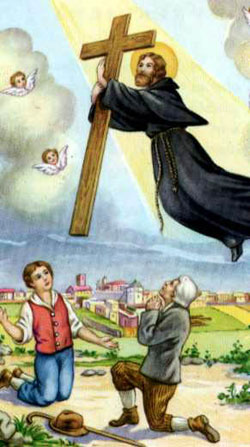
St. Joseph portrayed flying and
carrying a cross 
alongside his tendency to be airheaded, and act impulsive with outbursts of anger, made him very unpopular. He was scolded not only by people around him, because of this, but also by his mother. [1]
     
     After school he tried becoming a shoemaker, apprenticing with his uncle, but was not very talented for such. What he really wanted is a religious life, being very spiritual and religious ever since childhood, but inadequate education, and his likeliness to get things wrong, and forget about the chores assigned to him, caused his application to join Conventual Franciscan friars to be rejected ( 1620. ) as well as him to be dismissed after 6 months of service by Capuchin Monks near Taranto ( also 1620. ), and he was therefore, forced to go back to the scold of his mother. [2]

    Soon after returning home, he finally got accepted into Franciscan monastery, although to work as a stable boy, and care for the horses. He was said to have begun to change at that point, becoming better composed, and more serene, and his simplicity of life, piousness, and devotion have additionally impressed the monks so he was finally given chance to study for his priesthood. While he had more success with studies than ever before, they were still quite bothersome and a burden for him, but seems that Divine Providence wanted so that he become a priest. It is said that the examiner, conveniently, and accidentally picked the question, about which St. Joseph knew best, and in regards of which he was well versed, hence he finally became ordinated.     [3]

The Flying Monk

     Even after becoming a priest, St. Joseph of Cupertino was somewhat of an unorthodox, he was extremely pious, much like zealots, and is said to have eaten solid food once a day at best, fasted, and added bitter herbs to his soups such as Wormwood.

     He was more famed, or also notorious, at least among fellow monks, because of his miraculous levitation episodes. It would happen that during the mass he would get so deeply into prayer, that he would ecstatically levitate, often kneeling in the air, unresponsive to   pretty much anything, but his superior’s direct orders. The other monks would find his  sudden levitation disruptive, and some were even scared of them, because back then, such  supernatural abilities were deemed signs of demonic presence or involvement with dark magick and occult, and could have very well bring one before the Inquisition.

     According to the records, and lore and legends, the mere mention of G’d or spiritual matter, was often enough to set this saint off flying.  For example, on one occasion he levitated in the air during the singing of Christmas carols, soaring high in the air, before the altar, “knelling” in prayer, and on another occasion he  “ferried a cross thirty-six feet high through the air to the top of a Calvary group as easily as one might carry a straw” [4]  which is a scene often depicted in iconography related to him. He was popular and respect among the people, after many witnessed his miracles, and was often flocked and consulted for advices and help by them. He was said to have been   very devoted to Virgin Mary, and to have advised people to pray to her a lot, always having praiseful and inspiring words for her life and   work.

     He was beatified in 1753. and then sanctified 1763., ten years later.

Patronage, and Hoodoo spiritual work
    
     St. Joseph of Cupertino, was declared a patron saint of air travelers, pilots, exam takers and students, particularly poor students.

     However, he is seldom petitioned in Hoodoo, because the modern, marketers Hoodoo, wants us to believe that there is a list of Christian Saints which you can work with in Hoodoo, and which are Saints as recognized by Protestant Christian denomination. I for one, find this notion ludicrous, and misleading, being that Hoodoo was influenced by Catholic Christianity, at least originally, not Protestantism. 

     Nevertheless, many practitioners, including myself, preform spiritual work with Saints which are not on these Hoodoo lists, such as St. Cosmas and Damian   , or this Saint for example.

     Consequently the lack of information on how to “work” with these Saints appears, which is thankfully overcame by   testimonies and sharing of generous people who worked with these Saints, and their experiences become an invaluable sources.  That being said, before writing this article I looked this saint up in Anna Riva’s “Devotion to the Saints” and  Ray T. Malbrough’s “The Magical power of Saints”, and there was no entry on him.

     His feast day is 18th of September, and his herbs are Wormwood and bitter herbs, so You could mix Wormwood and Frankincense in an oil devoted to him, along with a piece of dry bread.

      An internet search yielded more results, which indicate how to work with this Saint in Hoodoo:
·         Purple or brown candles dressed with All Saints Oil are good  for working with him

·        *  His devotion places can be near the window, as he liked the outdoors
·        *  Offering of bread and fruits are fine, but as an  extremely humble Saint, he will truly cherish a  company, smile, belief in G’d, or some charity to those in need  
·         * A fine prayer to work with him can be this one:


O humble St-Joseph of Cupertino, singularly favoured by God, implore the Holy Spirit to enlighten my mind and strengthen my memory in the search of His Truth and Wisdom. May I succeed in offering God my finest work and may I grow in Knowledge, Understanding, Humility and Charity. May everything I learn in life be offered in faithful service to God, from whom flows that Wisdom which leads to eternal life. Amen.” [5]

     I’d presume that the best day to work with this Saint is Wednesday, and of course his Feast day, although, obviously, one can petition the Saint whenever the need arises.

Don’t forget it’s the Mercury retrograde time  be careful, vigilant and wise J If You need make a charm to protect You for its evil influences.
Many Blessings, Shadow

NOTES:  This article was written and composed by myself. If You wish to use any parts of it elswhere online, feel free but add credits  Shadow of Shadows magick place,  Shadow-333@hotmail.com  , or a direct link to this post

CREDITS AND REFERENCES: 

[1] According to the Wikipedia entry https://en.wikipedia.org/wiki/Joseph_of_Cupertino
[2] as under [1]
[3] According to the:
[4]  Cited from the source, which is listed under     [3]

[5] Courtesy of Miss Aura, a rootworker, who shared her experiences on working with St. Joseph of Cupertino on the following forum/message board http://forum.luckymojo.com/working-with-st-joseph-of-cupertino-questions-and-thanks-t19951s30.html

IMAGE CREDITS:  The image is from http://www.catholic.org/files/images/saints/72.jpg used here for illustrative purposes without any ill will

Jun 20, 2013

St Cyprian and Justina in religion and spiritual work


Icon of Saint Cyprian and Saint Justina of Padua © Helen Kishkurno
Beautiful Icon of St. Cyprian and Justine
by artist Elen Kishkurno
     Rather than speaking about St Cyprian alone, we shall here be discussing the hagiography as well as practical aspects of spiritual work with this Saint alongside with St. Justina.   This is due to the fact, that I am a Christian, and while a n  avid  Hoodoo practitioner as well,  when working with Saints, I try to give them credits, and  treat them according to Christian tradition. And  frankly many acknowledged and renewed Rootworkers ( Hoodooists ) shall do the same, more so If they are  into southern-old-conjure style . That does not mean I hold folk veneration of Saints as improper,  more like,  I am more on “canonic” side myself, particularly when it comes to certain Saints .

NOTE: St Cyprian of Antioch, although venerated in many Catholic and Christian churches, along with St. Justina, is not a historical character that we can prove it existed. His hagiography, as well as that of St. Justina is largely a myth or a legend, and some speculate that he could have been confused with St. Cyprian of  Carthage. The experience of the pious, and spiritual practitioners  that have worked with these saints, however, only solidifies the beliefs regarding them.  

Legend , lore and  hagiography according to Symeon Metaphrastes

     Saint Cyprian and Justina were contemporaries, living  during III and IV century, in Antioch in Prsidia, at that point, town that had been situated on the border of Pysidia and Phrygia, today a city in Turkish lakes region,  called Antakya  [1]   Saint Cyprian was either   a heathen [2]  by religion, or into Greek polytheistic religion, worshiping Apollo. Regardless, both Catholic and Orthodox sources insist that  he was trained and raised as sorcerer and that he “had dealing with demons” [3] . His parents were pagans as well, and according to Christian lore, inspired  him and supported him in his   studding and pursue of sorcery skills. 

     On the other hand, Justina  his contemporary,  and a fellow citizen of Antioch, was raised in pagan family by  father Aedesius and mother Cledonia  , but  was pretty much atheistic herself, at this point. The Divine providence wanted so that she had heard preaching words of some deacon as she stood by her window and he was passing by speaking of sacrifice of  the Lord  Jesus Christ, His resurrection and how he sits to the right of His Father,  The Creator of everything.  Justina felt some kind of  hard-to-define, fulfilling sensation n, and decided to sneak out to Church, to listen the preaching, whenever she could. And that had reassured her completely, that the Christian faith was for her,  what more , she eventually managed to  convert her parents as well, so they’ve all received baptism and became pious Christians.  Her faith was ardent , strong and fiery, she was virgin who dedicated her  life to the Christ.

     At this time, a young man, called  Aglaias,  had on some occasion seen Jutina on her way to the Church, and become infatuated and astonished by her beauty.  Troubled by impure thoughts ( we’d today say obsessed lol ) regarding Justina , he courted to her, and due to her refusal, and response that her “bridegroom is in Christ” , and that for His sake she preserves her purity, he tried to   forcefully  be intimate with the maiden. He’s attempt was luckily foiled  by the people  who had heard the screams of Justina, but Aglaias, fueled  with lust,  would not consider abandoning his plans. Hence he sought the aid of Cyprian, a well known   ritual magician, sorcerer, necromancer, and  pagan priest to  help him make Justina  abandon herself, and come to him.

Depiction of St Junstina  being   tempted
     St. Cyprian, at that point simply, Cyprian, comforted the young man saying he will make Justina come and seek him, by herself.  As skillful and powerful sorcerer he conjured a demon, who eventually gave him some kind of  a magickal powder, which Aglasius eventually sprinkled in Justina’s house to enable the demon ease of access. 

     Demon came, and induced some lustful sensations, and thoughts about Aglasias in Justina, who  thanks to her devotion and good sense, realized what was happening,  and with repentance and humility,  sincerely prayed to lord Christ to deliver her from these sensations and enemies  who imprint them on her, finishing the prayer by signing the Cross , which rendered demon’s power over her null and void, and forced him to fled in fear and shame.  Cyprian sent two more demons, one of which was “prince” ( in Goetian sense ) each more powerful than the previous, but Justina, defeated them with fasting, prayers and making sign of Cross. After few more failed attempts, startled by the power of Christian fate, Cyprian realized the trickery  of the demonic spirits that served him , and renounced them and the Devil ,   and chased them away by making signs of Cross, modeling after Justine.

     He repented for all the evil he had caused with magick, and his sins, which were numerous.  Seeing his true and sincere remorse, tears, and act of burning his books, persistence to stay in Christian Church even when the deacon tried  t o expel him, made the Bishop  to feel pity for him, compliment his repent and babtize him.

     Afterward, he was received in the Christian Church,  made pre-eminet, then deacon, priest  and eventually a bishop, while St. Justina became head of a convent.   Both St. Cyprian and St.Justina work from that point was commendable and enlightening, they had converted many people and had brought many faitless people to the faith, which made Emperor Diocletian  furious, hence he had ordered for them to be captivated, and tortured until they renounce their faith. After resisting extortions and various tortures, Diocletian even more angry then before ordered that they boil both of them in a large cauldron. Yet the water would harm neither St.Cyprian, nor St.Justina, and they prayed serenely in hot boiling water. Seeing that, certain Theocistus, embraced St.  Cyprian  as they removed him and Justia from the  cauldron, which caused him to share their fate, and be beheaded alongside the two.  [4]

     Their bodies were taken to be buried in Rome, first  on a private estate of certain lady called Rufina, and later entombed in Constantine’s basilica. 

     Now, it is important to know to not mix Saint Cyprian of Antioch, with Saint Cyprian of Carthage, which is a commonly occurring mistake, and You might find  such incorrect information posted at many places online. So have this in mind.

Patronage, worship and spiritual work

     St.Cyprian and  St.  Justina are venerated together in Catholic and Orthodox Christian Church , the feast day  falling on 26th  September according to Julian, and 15th of October according to Gregorian calendar.

     Saint Cyprian in Catholic Christianity is considered patron of the Turkish town Antakya, while in Orthodox Christianity, he is alongside St. Justina considered to be patron Saint of people oppressed by evil spirits and evil magick. Hence in Orthodox Christianity there are prayers against demons and evil  magick  addressed to St.Cyprian and Justina.

     He is depicted as an middle-aged, bearded men carrying an crozier ( curved kind of staff,  that bishops carry ) dressed as bishop, or in purple robes or cloak, in Orthodox Christianity often standing next to St. Justina and holding a book.

     In folk magick and Hoodoo Cyprian is patron Saint of witches, necromancers, hoodoists and conjurers ( aka rootworkers ) , occultists, demonologists,  and is invoked in rituals and spells for uncrossing, curse removal,  returning spiritual attack, divination, guidance,  and in all matters concerning spiritual and occult practice. He can even be invoked in  harmful magick spells, or  prior to working with Santissima Muerte, to protect   from the “moody” behavior of   ths spirit [5]

     His colors are purple, or indigo, he’s number is 9, and his day is Saturday, according to the various traditions.

     Personally I petition St Cyprian and Justina together,  least If I should work on some spiritual power increasing ritual, in which case I’d petition St Cyprian alone, or for Chastity in which case I might petition St  Justina alone. And even in such cases I think  I’d keep the same Icon on  my altar, showing both of them.

     Offerings to Saint Christian vary in traditions, and depending on practitioner, for there seems not to be a suggestion in Hoodoo nor folk magick. Glass of water, a standard Hoodoo offering for Saints will do, so will incense wafted at their image ( or statue  ) or a small monetary contribution to Christian community.

     A friend of mine from Spain, who is espiritisto and curandero, likes to place books on ritual magick on altar dedicated to St. Cyprian.  This seems like a good idea. St Justina was known for giving out alms to the poor, there’s  a way to honor her, would You not say ? Also having in consideration her virginity a bouquet of white flowers, particularly lilies, that in Christianity symbolize virginity, as well as Mother Mary, would all make fine additions. Finally ,  feeding the Saints [6]  as done in New Orleans, with seeds of Grains of Paradise  plant is another  fine option. 

     In Spain, Latin America and Brazil there's a whole “folk cult” of Saint Cyprian, where he’s called San Cipriano ( Spanish ) or Sao Cipriano ( Portuguese ), and  there is more than one book of spells associated with him, mostly being combinations of spells, recipes and formulae ( although one is a classical, ritual magick  Grimoire  ) often rather gruesome, macabre and requiring profaning graves and mutilating animals. All of them however, are much Younger than the III/IV century,  hence we can almost claim for certain, that neither of them  were indeed written by   the Cyprian of Antioch. These books, and  particularly   one newer edition, which is a compilation of few of these works bearing names such as “True book of Saint Cyprian” or “Grimoire of St. Cyprian : Clavus inferni” are , believed to be unlucky even to posses.  Superstitious people further claim that by simple flipping the pages, from back to front, will conjure the Wicked one.

     St. Cyprian is also a prominent figure in Iberian peninsula folklore, if not one of the leading characters,  and allegedly, in States, there is even a secret society based on his ideas, that require some sort of initiation ritual, teaches more “in-depth mysteries” ,  the things Eliphas Levi would have called “inner mysteries” , “keys of knowledge”  and similar.

Herbs and materials associated with St Cyprian

     The herb traditionally associated with St. Cyprian,  and also one being a main ingredient in the original oil
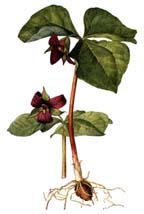
Beth root ( Trillium erectum L )
formula, dedicated to St Cyprian is Low John The Conqueror of Beth root [7]. This is  not the same (!) as  the Southern John, small John ‘da chew or Galangal root, despite the  fact that You will see many online  suppliers trying to  sell You one as such. They are either ignorant regarding the root, or are scamming people. Beth root is in the Lilliaceae family ( whereas Galangal or small John 'da chew , is from the Zingiberaceae family ) and in States it’s a highly ( !!! ) endangered species, and probably illegal to harvest in wildness. It’s rather resistant and easy to grow, so If You wish to use it, I suggest getting some seeds, as it is used as an ornamental/decorative e  plant as well. The root has an nasty smell kind of  like the rotting meat.  

     Other plants that are sometimes associated with him are Cedar and Myrrh, although whether that is a part of  some tradition, or   lore, or it came from  oil formulas scented with it, and  often containing myrrh resin and / or Cedarwood, I honestly have no idea.  I do know that both Cedar and Myrrh are commonly used plants in Necromancy, and are used in making suffumigations, which If we think a bit makes a lot of sense being that  he  was considered  to have conjured spirits both for  divination and to  do his bidding.

Prayers

     Prayers and Novenas to Saint Cyprian are not many, particularly in Catholicism, and some of them are folk written, hence in  Christian sense, non-canonic. Novenas are not shared because people would not make money selling You candles with Novenas printed on them.  If I was to share some novenas I have on my Saint Cyprian candles here, I would attract many angry suppliers, growling at me, and threatening me with all kind of stuff. And right now, I cannot deal with such shallow, twat-y people >.< 

     Instead I will provide here, a prayer translated into English ( by me ) , from Serbian Orthodox Church, which petitions St. Cyprian and Justina, asking humbly for  uncrossing and putting end to demonic oppression. I have used it myself and  find it extremely potent ( and swiftly acting ):

Philosopher and magus You have been until Your illumination, St. Cyprian. To a virgin, who’s beauty has fascinated a young men, three times You’ve sent fiends ( demons ), to ignite in her love towards the young men, but having failed and realizing the vanity and the void of your incantations, You’ve burnt all of Your books,  and by turning to Christ and receiving the Holy Baptism You have become  the bishop of  Antioch. Now, though, You rule and reside  with Christ in Paradise, priest-martyr*, together with Justina, the virgin that,  by receiving the Christ with all her heart,  tore up all the fascinations of evil spirits like cobwebs. Hear, (Oh) Saint Cyprian, priest-martyr, with holy virgin Justina, us who pray to  You ; deliver us from evil spells, being created  by the impure ones, to destroy** us. Free us from obfuscation with passions, from  the nets of lust  deliver us,  fence ( shield )*** us  from corruption of the evil people and chase away ( banish ) from us those who hate good, who please the Devil, so that we could in peace,  serenity, and humility, live the  rest of our lives, daily praising the Lord. Amen 

     As mentioned earlier, this prayer is  great in Uncrossing work , curse removal, removing love and lust spells with which can  be used in conjunction,  banishment of the demons, and putting end to  oppression caused by them and all sort   of evil spirits.   For a simple Uncrossing ritual, You can light two white candles on each side of icon that depicts St. Cyprian and Justina on Your altar,  dress them with Uncrossing or similar oil,  read the given prayer,  possibly combined with Psalms or prayers against evil.

Uncrossing wash with St.Cyprian and Justina

     Place a transparent dish with spring water, over the image of St.Cyprian and Justina, add about a teaspoon of Holy water  and some  blessed salt to it ( Uncrossing salts will do brilliantly in a pinch too ), and read the above it Psalm 37th and prayer to Saint Cyprian and Justina, and leave it covered over night. If You wish You may also add a spring or Hyssop, Basil or Rosemary to the water. Use  it as a magickal bath or floorwash to remove and reverse evil spells. If You feel so inclined other  Sacred words You could speak in  blessing of this wash include Psalm 3rd ( especially if the Crossing had caused mental problems and headaches ) and Psalm 53rd , which is very good from protection of those who do evil.

Spirituality mojo with St.Cyprian medal

     In folk tradition and Hoodoo, St Cyprian is well known and  often petitioned guide, and a Saint who can help attain and  hone magickal skills and abilities. Following mojo hand, will help in such works, as well as increase general spiritual awareness. In a purple mojo bag combine the following:

·         Saint Cyprian medallion, or praying card
      ·         Paper with Your name written in continuous spiral, and Your own personal concern wrapped in it
      ·         Solomon’s seal root (  which is a rhizome by the way )
      ·         Master root ( If you happen to lack it, substitute with Galangal root )
      ·         Cinnamon powder
      ·         Ginger rhizome
      ·         Five fingers grass  leaf

     Bless the mojo the standard way, and dress/feed with St. Cyprian oil, Power oil,  Spirit guide oil, Special oil #20,  or even Florida water.

     Carry first 9 days constantly with You and sleep with mojo ( some people do this with every mojo ) then carry  when needed.

     For increasing of spiritual power, and even getting spiritual lessons , You can perform honoring/invoking  rituals to St Cyprian [8]  and although that scrupulous-type pursue of magickal power, for the sake of power,  asking spirits to grant one an ability, is not my cup of tea, there are good rituals to rather help one develop occult skills gradually and in favorable, non-abrupt  way.
I do hope this information  and the ideas for  working with Saint  Cyprian I presented here, composed for my personal practices, can serve You and maybe even inspire You to work with St.Cyprian and Justine. Thank You for reading, and many Blessings  Shadow :)

NOTES: This article had been  written and  composed by myself, therefore if You wish to use any part of it elsewhere online , feel free but do add credits; Shadow of Shadows magick place, Shadow-333@hotmail.com    or a direct link to this  post.

CREDITS AND REFRENCES:
Explanations in regards of words marked with asterisk  in the text

* priest-martyr was my best attempt to translate Serbian word “sveshtenomuchenik” which seems to be some sort of theology term, coved by  simply merging words priest and martyr

** The original word used was “execute” , yet I decided  that somehow more appropriate for English translation would be “destroy”

***words given in brackets   are alternative translations, use whichever You feel is more suiting and “correct” , whichever You feel  resonates more with Your   perspective
[1] according to  http://en.wikipedia.org/wiki/Antioch,_Pisidia
[2] according to http://www.newadvent.org/cathen/04583a.htm  , while Orthodox sources commonly say he’s parents and  previously, the Saint himself, worshiped Apollo  and  other deities of Greek pantheon
[3] as under [2]
[4] Parents names of St Justina, and the young men, as well as certain details ( St. Justina hearing the deacons preaching and others ) , as found on : http://orthodoxinfo.com/death/cyprian_justina.aspx  , cross-referenced with  information provided on Catholic Encyclopedia,  http://www.newadvent.org/cathen/04583a.htm  as under [2]
[5] As stated here: http://www.luckymojo.com/saintcyprian.html
[6] As suggested by Sir Ray.  T Malbrough in his book “Hoodoo Mysteries: Folk magic, mysticism and rituals” 7th page,  Llewellyn worldwide publishing
[7] According to  writings of Judika Illes , mentioned in few   of her works
[8] Example of a  very nice ritual of such, for working  with St Cyprian and build a relation with him is   given here: http://ravenconjure.blogspot.com/2010/08/saint-cyprian-calling-upon-patron-of.html


IMAGE CREDITS: First image is embedded from: http://kishkurno.com/html/iconpainting_en.html , and is used for illustrative and explanatory purposes, without any ill will. Second image depicting "Temptations of St. Justina" is from: https://blogger.googleusercontent.com/img/b/R29vZ2xl/AVvXsEhtZGFpRGKP8R3iWaXxI1gb9kOQAH3BwLlXNr28yA-biaV3qzREy73qAD6FWQwcLfhkymYhJS74v1-pSpiY0ej-_ygJ9h0POSc1ErLY3stxb4X1B4lZ1PkvgYBNHUMQWRV4uPr2914eMi0/s1600/Peirasmoi-ag-Ioustinis-strog-2010.png , for illustrative and explanatory purposes, without any ill intentions, edited  for posting here by myself, Image of Beth root is from http://www.alchemy-works.com/Resources/small_trillium.JPG used here for illustrative and educational purposes only, without any ill will

Dec 14, 2012

Working with St Nicholas of Myra


Icon, showing St Nicholas, and Lord Jesus and Theotokos
alluding to Divine Intervention , that was said to
had allowed St. Nicholas to take participation in
Council of Nice. Note how he holds the Bible, another
common motive in St. Nicholas iconography
The Archbishop of Myra, the Wonderworker, as alternatively   reffered, St Nicholas, is a widely venerated and worshiped Saint.  Both by Catholics, Orthodox, as well as some other Christian groups . We can say with certainty he was a 4th century spiritual figure, but the exact date of his birth and exact year  of his death cannot be claimed with certainty .   The name Nicholas ( form Greek “nike” and “loas”) could be translated as “victory of the people” [1] or more accurate “victorious for the people” . A benefactor and protector of the meek and needy, Saint Nicholas earned  worldwide fame and served as inspiration of the mythical figure of Santa Claus.

However,  actual, factual information about the life of St Nicholas  are little and scattered.  The most commemorated event among Christian folk is his death ( 6th or 19th December depending on the Calendar  ) but  at least two more dates are dedicated to St. Nicholas , May 9th the day when his relic were transferred, and  July 29th which is the day that commemorates it’s  date of birth [2]

Hagiography

Saint Nicholas was born in Province Lycia,  Asia Minor, in the city of Patara, form wealthy and pious parents  ,  whose names  differ  depending on source . In Orthodox Christianity, they were most known as Teophanus and Nonna.  Even as a young man, he was expressing great gifts or sympathy and empathy, and was egger towards  Christian spiritual tradition, he was pious and kind .  He went with pilgrims  to Egypt, and was subsequently consecrated as Archbishop , near the end of the IV  centur y . He was first taught Christianity by his namesake uncle and they got to seminary school  together,  all that occurring before him becoming and archbishop of course.

 St Methodius, Patriarch of Constantinople   had written  a hagiography   of Saint Nicholas, somewhere  in middleage , but readily admitted  that due to lack of sources, many of St Nicholas related information, may  simply be part  of  body of legend/s   related to this Saint.   The legend  of St Nicholas, giving away some of his inheritance for the dowry of three unfortunate daughters, is the most historically supported one.

He was imprisoned during the persecutions of Diocletian and released by Constantine after his ascension to emperor. Nicholas was noted for his defense of Orthodoxy against the Arian s . [3]   But even while being imprisoned St Nicholas was said to had  taught  and spread the word of Lord voraciously.  Upon liberation he of course continued to do the same, and was even for life considered a Saint, by many pious people, that prayed to him while he was alive! [4] Furthermore, according to Christian legends and lore,  he was able to  hear   and  head all the prayers  directed  to him even while alive!

Many sources place St Nicholas on Council of Nice, as participant , even though he  is not listed  in official documents of this council. It is speculated that it was so due  his act of slapping the Arian, an heretic, which he did out of the passion with which  he defended the true teachings of Christianity.  Nevertheless he can historically be placed in Nice, at the time Council was held.

Legends and Lore

The host of legends  is surrounding St Nicholas’s life and miracles, but probably the most famous, and one historically supported is one regarding poor man from Patara, and his three daughters.  The old mad had no ways of procuring dowry  for them, and back  than it pretty much meant they would   not be able to  get  married. Taking in consideration that they were poor, the most likely fate  that was expecting these girls  would be becoming  prostitutes. Some version of the legend even say their dad was getting ready to sell them into slavery.  St Nicholas upon hearing of this,   gave girls three bags of golden coins ( according to some version three larger lumps of gold )  and he did it secretly, wanting to remain anonymous in his benefaction. In any case, girls were saved from  the unfortunate  future, threatening to become  their doom. Many version of the legend speak of St Nicholas throwing  gold down the chimney ( sounds familiar ? lol ) and doing so for three consecutive nights. According to some versions of the legend the third girl    , had hung    her socks  insided of the chimney to dry them, and the gold feel in  one of them, and when the girl took of the sock, and found the gold, she was thrilled . This had more than likely lot to do with the modern day custom of   hanging the socks up by the fireplace on Christmas eve.


Artistic depiction of legend according to which St. Nicholas
had ressurected  the three unfortunate  boys
Another legend speaks of certain island being struck by famine,  and  an evil butcher,  who lured some children ( according to other versions three Young men, or three clerks )  into his home ( in some versions Clerks or youngmen asked to spend the night at his house ) where he slaughtered them , tore their bodies apart, and intended to sell them off as ham.  Saint Nicholas was said to be visiting the region to care for the hungry, as he was known  be doing,   and seeing the butcher   came to know his horrible crime.  Hence, he resurrected the children/young men/clerks, who were according to one  version of the legend about to end up in meat pies :S

`St Nicholas was, and is associated with sailors and sailing and is therefore a patron of such. While he was  alive, he was known to travel a lot from one place to  other quite often, and a common mean of transpiration for him was ship.   Many legends speak of him delivering sailors and ships from storms and sinking.

After his liberation by emperor Constantine, St Nicholas  decided to itinerate the holy places and monasteries and  during his traveling to mount   Athos, he saved a ship from sinking via means of prayer. Once, traveling to Lycia, St Nicholas hired a men to take him with his prow ( ship ) there, and paid him as much as the men asked.   The men was scrupulous and ordered sailors not  go to Lycia afterall, while of course, keeping the money. At the points  powerful  winds rose and turned the   ship in  direction of Lycia. No matter how hard the sailors tried to get their initial course back, the wind would overpower them easily, so in the end the ship made it to Lycia, and St Nicholas disembarked   safely and promptly. [5]

Another legend  speaks  of   some pirates, whose ship got caught in the storm,  on their way back from Egypt. Deperate, they’ve fallen to their knees praying to St. Nicholas, begging  him to save them from what had  undoubtedly  awaited them,  death in the sea.  St. Nicholas miraculously appeared, taken the rudder,  drove the ship on safety, and disappeared. When they arrived to the land,  they saw their savior and started thanking  him, but St. Nicholas replied that they should thank the Good Lord, for he ( saint Nicholas   )  is merely sinner and human, like all the rest. He then proceeded  to teach  them  that there are better “lifestyles” than being pirates. [6]

He  is also known to  have saved  up to three innocent man from execution, on at least two occasions.

Another legend speaks of miraculous multiplication of the wealth ( symbolic of wealth ) that had occurred ,  because St. Nicholas promised it will. The story speaks of famine in Myra (311-312 ) and ship   that happened to be at port, at the moment,  which was supposed to deliver wheat to emperor in Constantinople.  Saint Nicholas asked for some wheat for the  starving people,  and sailors finaly gave in, though reluctantly in fear of the emperor’s reaction. They were calmed by the promise of St. Nicholas that they will be fine, and shall not suffer any kind of loss for their consideration,   and they’ve later discovered that all the wheat ( extremely large amounts )  they donated was miraculously restored.


Patronage and folk Cult

Relics of St Nicholas are preserved in Italy, in Bari, where two churches ( one Catholic , one Orthodox ) are erected In his favor.  Part of the relics, can be found in Venice ( Lido ) as well.

Miraculous  relics were know in Myra to  exude a clear watery fluid, that smells like Rosewater and is called “manna” ( sometimes also Myrrh ), and they are continue doing  so in Bari.  This liquid is collected each 6th of December , for the Saint’s  sarcophagus,  by clergy of  the Basilica, and can be purchased in nearby shop . Religious folk widely believe it has wondrous  healing, and blessing  properties.

In Italy,  Russia  as well as Balkan Peninsula, Saint Nicholas  is  piously venerated Saint, and  an “every day/thing go-to Saint” , that  religious folk confide in. In Albania, Catholic Albanians even swear in St Nicholas name, although I personally find swearing using Saint or G’d name being tad disrespectful.  People who do it, don’t see it that way though.  In Russia , nearly every Church and/or Temple/ Monastery  have a  section dedicated to Saint Nicholas.  In Balkan Peninsula ( mainly Serbia, Montenegro, Macedonia, and  possibly some parts of Bosnia, as well as Diaspora people all over the peninsula ) he is  a Saint  worshiped as feast Saint ( a patron saint , celebrated as such on his feast days by specific families )  and a namesake Saint of many individual s, although all  Orthodox Christians are very keen on addressing to Saint Nicholas in times of need for healing, deliverance from trouble, injustice, poverty and so on.

In modern world Saint Nicholas got to be associated  with Santa Claus,  as he was well-known to be very generous, especially to  the children. 

His, secular title of “Santa Claus” might  have originated from  immigrants of Germanic and Nordic lands who  settled in the United States, and  the image of St. Nicholas, or "Sinterklaas," as he is known among the Dutch, slowly changed to that of "Santa Claus" with little tie to the spirituality of Christianity. [7]

 Saint Nicholas is considered to be patron Saint of sailors, children, student and poor people, single women, brewers and distillers, unwed mothers, merchants.

 Working with Saint Nicholas

Saint Nicholas is said  to  be very promptly in answering to those in need, and with  reasonable , heartfelt prayers. Russian people  often have home altars dedicated to St. Nicholas, so  when the problem/s arise/s  , they light a candle  in front  of his image and pray to him.  Some among the most creative ways to work with this Saint, in form of spellwork or folk rituals, or simple prayers are done on his Feast day 6th/19th December.

·         For example, as a kid I was taught the simple folk ritual, pretty well known here. The ritual says that on St Nicholas feast day You have to do three good deeds, than just before midnight write three wishes on a piece of paper  and place them nearby St Nicholas’s image or  beneath a candle dedicated to him.

·         Another custom, similar in methodology calls for three oranges , that are symbolic of  gold pieces St Nicholas secretly gifted girls from legend with, to be given to three people , sometimes alongside socks, or slippers, which are also considered to be ideal gift for people on St Nicholas’ feast day or Christmas.  It is believed that people on St. Nicholas should get some  new clothing item to entice the luck , and socks , slippers and shoes were for some reason believed to be ideal choice.

·         To increase Your money, particularly If You are really in need try  this simple jar spell : In a glass jar place some  coins,  preferably from various currencies ( let’s say Dollars, Pennies, Euros  ) , add 3 smaller Orange or tangerine peels and a handful of wheat.  Throw in finally a parchment with Your request where You have  written why You need money, and If You wish a prayer to St. Nicholas. If You have, add some Pyrite chips or dust as well, smallest  pinch will suffice.  Pray over the jar. Then close the lid, place a candle atop of the jar, dedicate it to Saint Nicholas ,and  affix image of St. Nicholas  on the outside  of the jar. Light the candles and once again say You prayers. When the candle burns all the way down , place candle somewhere elevated , yet secluded place near where You spend  most time.

A prayer that could be used in working with petitioning Saint Nicholas may be as follows:

Glorious Nicholas, my own protector! from that bright throne where thou dost enjoy the vision of thy God, in pity turn thine eyes upon me; ask for me from God those graces and helps most seasonable in my present necessities, whether spiritual or temporal, and especially the grace of . . . . . . if such be expedient for my eternal welfare. Forget not, glorious and holy bishop, our Sovereign Pontiff, the holy Church, and this pious city. Bring back to the right way of salvation those who live steeped in sin, or buried in the darkness of ignorance, error, and heresy. Comfort the sorrowing, provide for the needy, strengthen the weak-hearted, defend the oppressed, help the sick; let all know the effects of thy powerful patronage with Him Who is the supreme giver of all good. Amen

Our Father, Hail Mary, Glory be to the Father.

V. Pray for us, blessed Nicholas.
R. That we may made worthy of the promises of Christ.

Let us pray:

God, Who has honored, and ceasest not daily to honor, Thy high-priest and glorious confessor, blessed Nicholas, with innumerable miracles: grant, we beseech Thee, that, by his merits and prayers, we may be delivered from the fires of hell and from all other dangers. Through Christ our Lord. Amen.
[8]

Devotional oil for St Nicholas

Considering the hagiography of St. Nicholas, I’d make oil devoted to him in this manner:

·         Rinds or three Oranges ( does not have  from whole Oranges though )
      ·         Half a teaspoon of the Wheat (  seeds  )
      ·         OPTIONAL: Pyrite  chips  or Gold scrapings
      ·         All in base of Olive oil ( let’s say 20-30ml or around 1 fl oz )

Place the oil on the Bible, and let it sit for at least three days. If You are to  make the oil by warming it in double boiler, You are to place oil  on Bible when finished. You can scent it with Orange essential oil, and You can add Vitamin E capsule, or some Benzoin  to preserve the oil.

Giving thanks

I could not  find any concrete info on spiritual work with St. Nicholas, other than  mentioned folk rituals and beliefs and various   Christmas  customs and traditions in modern age. Above given are my suggestions on how to work with the Saint, and so are the following suggestions for giving thanks :

As we have seen, in the folk rituals included above St Nicholas likes charity and gift giving,  and the Orange fruits are traditionally associated with him. Hence, You can place some oranges or wheat on his altar, and donate money to charity, or people in need, anonymously, or bye some poor kid a toy, visit  some orphanage and play with kids  there, and give the small presents ( like oranges ) and maybe also light a candle for the Saint, after Your petitions have been fulfilled. You can donate  churches and temples  dedicated to him.  

Check also how to work with St.Barbara the Protomartyr, as another of "december's Saints"
Many Blessings , Shade :)


NOTES:
This article was written and composed by myself, therefore should You decide to use any part of it elsewhere, feel free, but do add credits; Shadow of shadows magick place, Shadow-333@hotmail.com or a direct link to this post

CREDITS AND REFRENCES:
[1] Translation as given on Wikipedia’s page on St Nicholas, here :http://en.wikipedia.org/wiki/Saint_Nicholas
[2] according to : http://orthodoxwiki.org/Nicholas_of_Myra
[3] quoted from same source as under [2]
[4] according to teaching of Russian and Serbian   Eastern Orthodox Church
[5]   Translated , edited and adopted from “Kalendar z a Srecne Dane” ( lit. Calendar  for happy days ) by Jasna Jojic Pavlovski,   famous Serbian anthropologist and folklorist
[6] As under [5]
[7]  According to on Orthodox wiki’s page on St Nicholas, http://orthodoxwiki.org/Nicholas_of_Myra
[8] Prayer is from : http://catholicharboroffaithandmorals.com/St.%20Nicholas.html used for educational purposes  without any ill  will
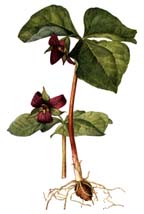
IMAGE  CREDITS:
 First image from: http://www.oystermouthparish.com/resource/st-nicholas.jpg, other is from :


both used for illustrative and explanatory purposes merely, without any ill will